

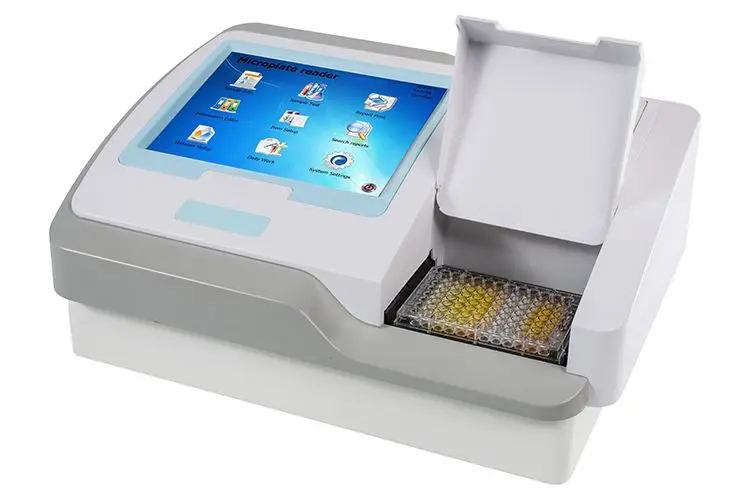
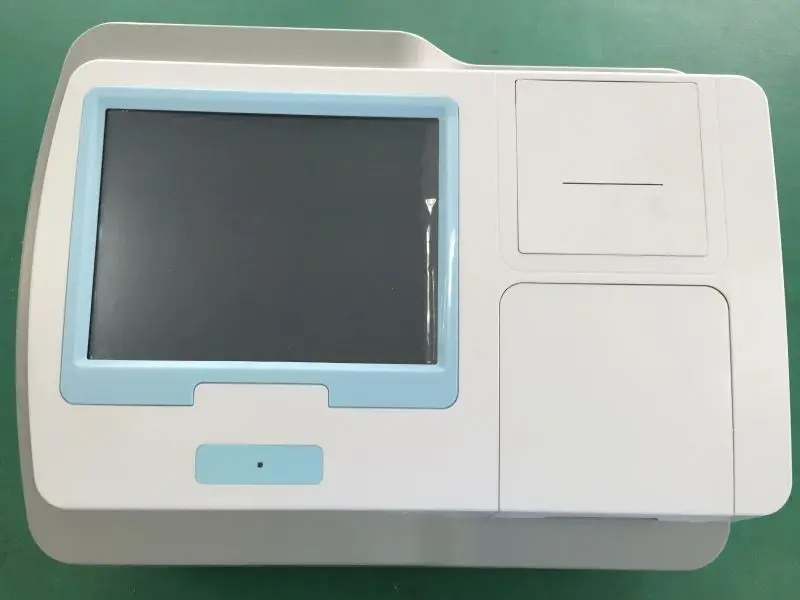
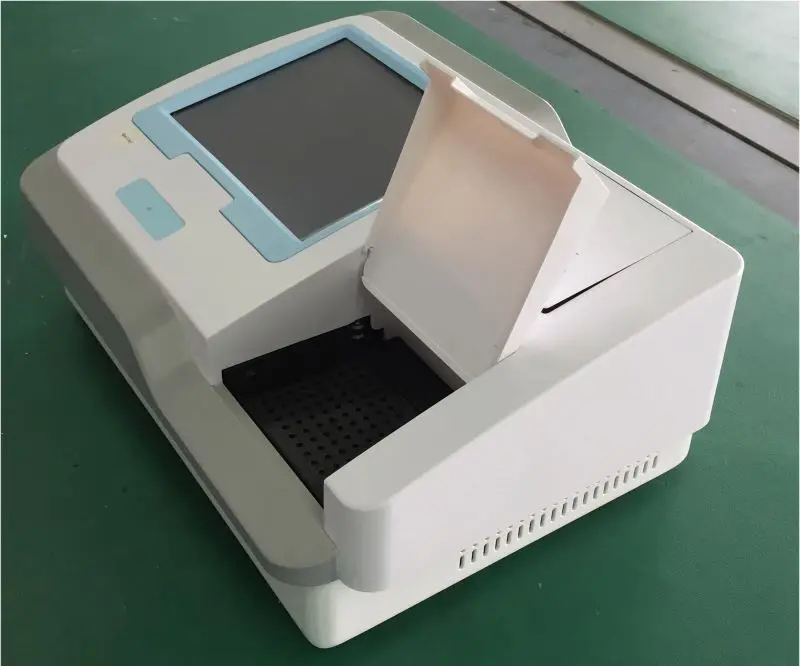
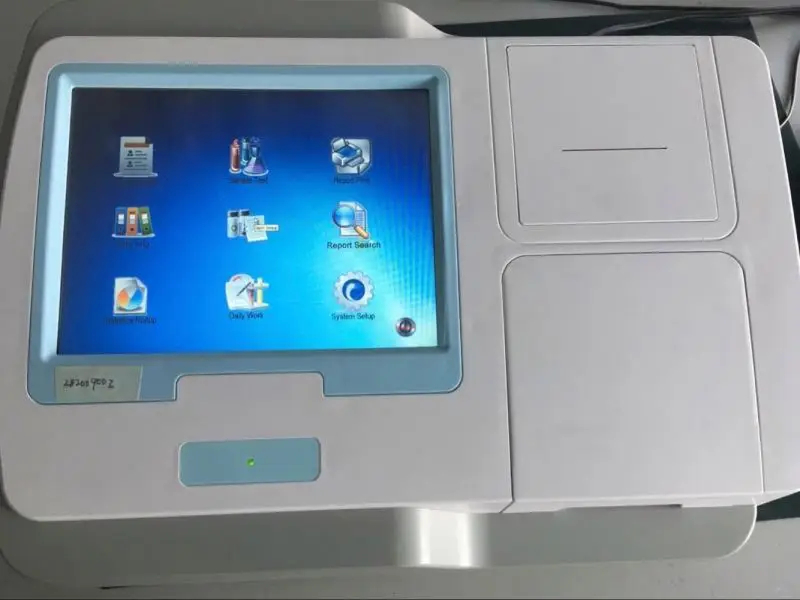
Elisa Microplate Reader Clinical Analytical Instruments Microplate Reader
Description
48/96 Well CE&ISO Citified Elisa Antibody Analyzer 8 Channel Big Screen Elisa MicroPlate Reader for Lab Use
Elisa Microplate Reader Immunoassay System with Halogen Lamp 10.4″ LCD Touch Screen 3-6s Reading Speed
Laboratory Equipment Elisa Microplate Reader with Windows System ELISA Analyzer Lector De Microplacas Elisa
|
Resolution |
0.001Abs |
|
Light Source |
Halogen lamp |
|
Wavelength |
405, 450, 492. 630nm, 4 more filters optional |
|
Reading Speed |
3 secs Single wavelength 6 secs Double wavelength |
|
Memory |
Stable memory stores up to twenty million test data,500 test projects |
|
Dimensions L*W*H mm |
360*460*600 |
|
Weight |
11kg |
|
Power |
Ac 110v-220V, 50/0Hz |
Product Description
Product Description of Hot Sale Portable Multifunctional Essays Touch Screen Elisa Microplate Reader for Lab
What’s a Microplate Reader?
A microplate reader is a laboratory instrument that is used to measure chemical, biological or physical reactions, properties and analytes within the well of a microplate.
A microplate consists of small wells in which separated reactions take place. These reactions convert the presence of an analyte or the progression of biochemical processes into optical signals. The microplate reader detects these signals and thus quantifies the parameter of interest.
What Can Microplate Reader Do?
A microplate reader is used for the quantification of several biological and chemical assays in a microplate.
Besides biological, biochemical and pharmaceutical research, both in academic and industrial environments, plate readers are also used in environmental research, and in the food or cosmetics industry.
They are widely used in research, drug discovery, bioassay validation, quality control and manufacturing processes in the pharmaceutical and biotechnological industry and academic organizations.
How Does Microplate Reader Work?
A microplate reader detects light signals produced by samples which have been pipetted into a microplate.
The optical properties of these samples are the result of a biological, chemical, biochemical or physical reaction. Different analytic reactions result in different optical changes used for analysis.
Most frequently used detection modes in laboratories worldwide include Absorbance, fluorescence intensity and luminescence.
Advantage
Advantage of Hot Sale Portable Multifunctional Essays Touch Screen Elisa Microplate Reader for Lab
♣ Easy Operation
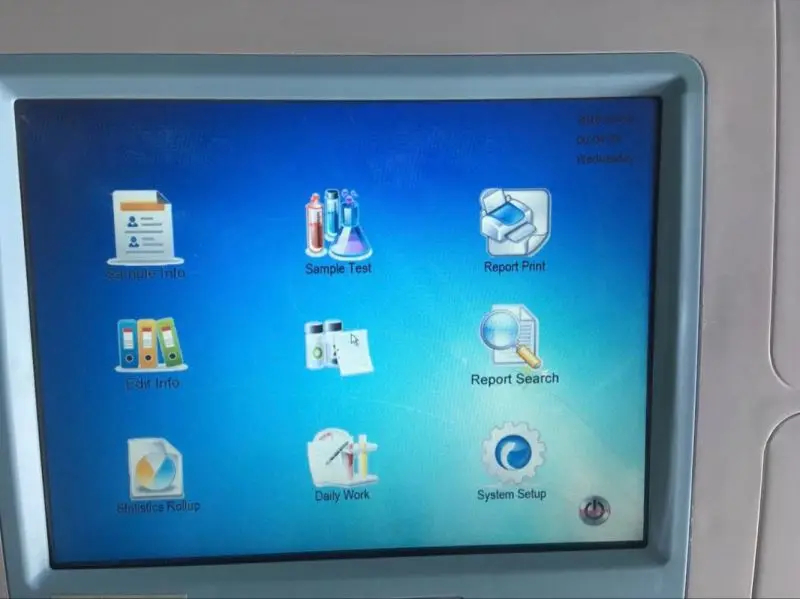
Easy Windows operation software, with touch screen or mouse, Large LCD display.
10.4 inch Large Color Touch Screen offers clear and easy opertaion.
* Multi-forms in result output including patient comprehensive report
* 10.4 inch capacitive touch screen, Work individually or via PC, Diatek software provide freely
* Windows system, WIFI funcation, Mutual data transmission between device and PC
* Eight-channel optics for fast reading, Plus Reference channel for optimised light intensity
* 10 filter position and Incubator module can be customized,
* long-life20000hours LED light for fast reading and minimal maintenance costs.Incubation module optional.
* More than 10 kinds of algorithm can meet various assays, Linear, end-point, ABS,Cut-off, kinetics.
♣ Fast Analysis
Fast Results in 3-6s depends on different wavelengthes.
Comprehensive qualitative and quantitative data-evaluation functions with cut-offs, curve-fits and transformation formulas
♣ Auto Calibration
Auto Lamp adjustment and auto calibration.
♣ Multiple Results Output
Multiform result output including patient comprehensive report.
External Printer and PC available for data management.
Functions
Functions of Hot Sale Portable Multifunctional Essays Touch Screen Elisa Microplate Reader for Lab
Specification
Specification of Hot Sale Portable Multifunctional Essays Touch Screen Elisa Microplate Reader for Lab
What’s a Microplate Reader?
A microplate reader is a laboratory instrument that is used to measure chemical, biological or physical reactions, properties and analytes within the well of a microplate.
A microplate consists of small wells in which separated reactions take place. These reactions convert the presence of an analyte or the progression of biochemical processes into optical signals. The microplate reader detects these signals and thus quantifies the parameter of interest.
What Can Microplate Reader Do?
A microplate reader is used for the quantification of several biological and chemical assays in a microplate.
Besides biological, biochemical and pharmaceutical research, both in academic and industrial environments, plate readers are also used in environmental research, and in the food or cosmetics industry.
They are widely used in research, drug discovery, bioassay validation, quality control and manufacturing processes in the pharmaceutical and biotechnological industry and academic organizations.
How Does Microplate Reader Work?
A microplate reader detects light signals produced by samples which have been pipetted into a microplate.
The optical properties of these samples are the result of a biological, chemical, biochemical or physical reaction. Different analytic reactions result in different optical changes used for analysis.
Most frequently used detection modes in laboratories worldwide include Absorbance, fluorescence intensity and luminescence.
Related products
-

Rehabilitation Equipments CPM Knee Machine Physiotherapy Continuous Passive Ankle Hip and Lower Limb CPM Machine for Knee
Select options This product has multiple variants. The options may be chosen on the product page -

BProbe-2 4d Wireless Bladder Scanner Ultrasound Wireless Scanner for Bladder Examination Medical Machine Hospital
Select options This product has multiple variants. The options may be chosen on the product page -

AQ-100 Professional Medical Electronic Endoscope Video Gastroscope Colonoscope System for Human
Select options This product has multiple variants. The options may be chosen on the product page -

Endoscopy Hospital High Definition Image Flexible Video Gastroscope and Colonoscope
Select options This product has multiple variants. The options may be chosen on the product page
Reviews
There are no reviews yet.